Competitive intelligence for automotive manufacturers
Valona delivers continuous intelligence on the global automotive landscape, covering OEM strategy shifts, electrification trends, and regulatory changes, helping manufacturers stay ahead in a rapidly transforming industry.


How automotive companies use market and competitive intelligence
Enable smarter decisions across the automotive value chain.
-

Monitor automotive competitors and OEM strategies
Track OEM announcements, supplier investments, plant expansions, EV platform developments, M&A activity, and regulatory changes across global markets, giving you more time to act before the industry pivots.
-

Track automotive market and technology trends
Dashboards and AI-generated analysis bring together relevant automotive signals across markets, competitors, technology, regulation, and trade. Teams gain clear visibility into what is changing and what it means for cost, capacity, and competitive positioning.
-

Monitor global automotive industry sources
Monitor 3,300+ dedicated automotive sources and track over 1,400 companies globally. Valona brings together intelligence from industry publications, regulatory bodies, trade associations, financial reports, and regional media in one secure place.
-

Support decisions across the automotive value chain
Deliver actionable intelligence to strategy, procurement, R&D, and commercial teams, clarifying competitive dynamics and emerging risks across automotive markets to support faster, more aligned decisions.
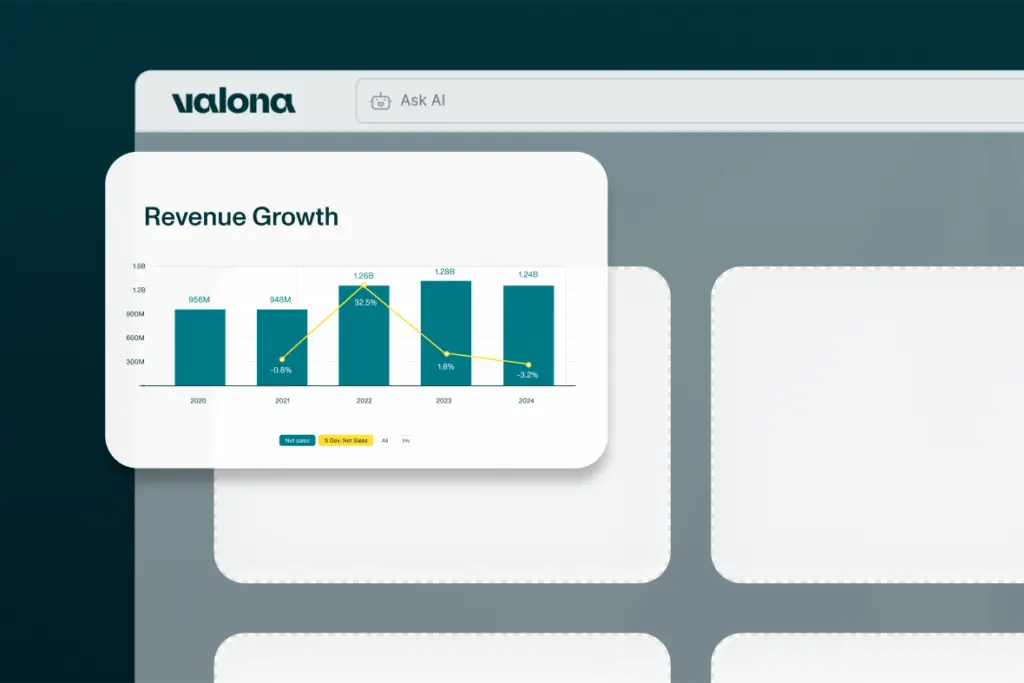
Automotive market intelligence dashboards
Bring OEM strategies, Tier 1 and Tier 2 supplier activity, EV ecosystem developments, regulatory changes, and global market shifts into one structured, always-current view. Dashboards act as a central hub for cross-functional teams navigating supply chain volatility and technology transformation.
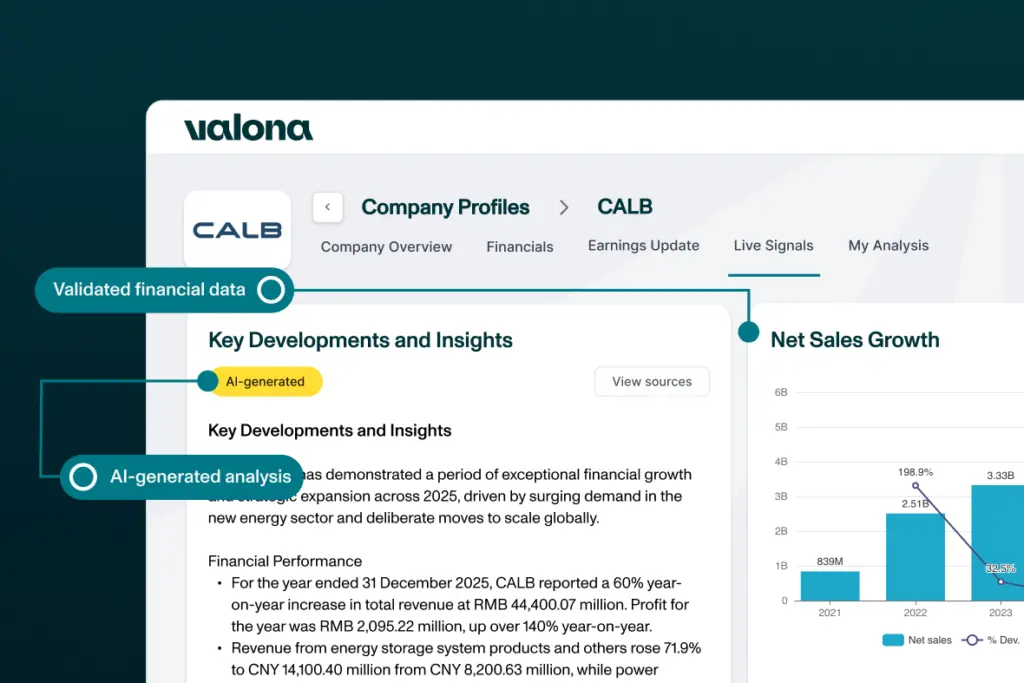
Automotive competitor intelligence and profiles
Maintain structured profiles for key market players, combining financial data, strategic developments, investments, partnerships, and product strategies in one evolving view. Embedded AI analysis brings clarity to performance shifts and competitive dynamics, supporting sharper decisions across the value chain.

Market intelligence alerts
Receive automated alerts and curated newsletters covering production changes, regulatory developments, technology announcements, trade policy shifts, and competitor activity. Delivered in a clear, ready-to-use format for operational and strategic decision-makers.
Automotive market and competitive intelligence FAQ
Automotive competitive intelligence is the continuous process of turning external information into insight that supports better business decisions. It helps automotive companies understand competitor strategies, anticipate market changes, and assess implications for their products, investments, supply chains, and market position.
Automotive companies typically monitor:
- OEM and competitor strategies
- Vehicle launches, platforms, and product roadmaps
- Manufacturing investments, plant expansions, and capacity changes
- Supplier activity, partnerships, and mergers and acquisitions
- Financial performance and investment priorities
- Technology developments, including electrification and software-defined vehicles
- Regulatory changes, trade policy, and supply-chain developments
The right monitoring scope depends on the decisions the intelligence program is designed to support, such as product strategy, sourcing, investment planning, market entry, or competitive response.
Automotive companies can monitor competitors and OEMs globally by combining company announcements, financial disclosures, industry publications, regulatory sources, trade associations, and regional media with structured competitor profiles and automated alerts.
Valona brings these sources into one intelligence environment, monitoring more than 3,300 dedicated automotive sources and tracking over 1,400 companies worldwide. This helps teams follow developments across markets and languages without relying on fragmented manual research.
AI helps automotive intelligence teams process high volumes of external information more efficiently. It can identify relevant developments, classify and prioritize information, reduce irrelevant content, summarize source material, and surface patterns across companies, technologies, markets, and regulations.
Used alongside continuous monitoring and expert interpretation, AI enables teams to spend less time finding information and more time evaluating what a development means for the business. Valona’s automotive offering combines AI-generated analysis with monitoring of market, competitor, technology, trade, and regulatory signals.
Automotive market intelligence can help companies track electrification, vehicle platforms, manufacturing capacity, battery and EV ecosystem developments, emerging technologies, regulation, trade policy, supply chain conditions, partnerships, and competitor investment.
By connecting these signals, teams can identify broader shifts—not just isolated announcements—that may affect demand, costs, capacity, sourcing decisions, technology roadmaps, or competitive positioning.
Automotive market intelligence is used by strategy, competitive intelligence, procurement, R&D, innovation, manufacturing, and commercial teams. Each function applies the same external market view to different decisions, such as evaluating competitor strategies, monitoring suppliers, assessing technology shifts, anticipating regulatory risk, and identifying market opportunities.
A shared intelligence environment helps teams work from a consistent, continuously updated view of the automotive market. Valona positions its platform as supporting strategy, procurement, R&D, and commercial teams across the automotive value chain
Automotive competitive intelligence focuses on specific companies, such as OEMs, suppliers, competitors, partners, and emerging entrants. It examines their strategies, products, investments, capacity, partnerships, financial performance, and market moves.
Automotive market intelligence takes a wider view of external forces affecting the industry, including technology adoption, regulation, trade, demand, supply chains, raw materials, manufacturing capacity, and regional market conditions. Together, they help companies understand both competitor behavior and the wider forces shaping the market.
The automotive industry changes quickly through product launches, EV investment, supply-chain disruption, policy changes, trade measures, technology partnerships, and manufacturing-capacity decisions. Continuous monitoring helps teams detect relevant developments early, assess their potential impact, and act before an issue or opportunity becomes widely visible.
How automotive and manufacturing companies use Valona
Explore how manufacturing customers use Valona to make a tangible impact on their organization