Market intelligence for the QSR industry
See what’s changing across suppliers, sourcing markets and food categories before it becomes a supply problem. Valona gives quick service restaurant procurement teams the market intelligence to plan sourcing, prepare for disruption and go into supplier conversations better informed.






Quick service restaurant market intelligence that goes deeper
Market intelligence for the QSR industry should go beyond restaurant and consumer trends. For procurement teams, that means seeing deeper into the suppliers, sourcing markets and food categories behind their supply.
A market intelligence platform built for QSR decisions
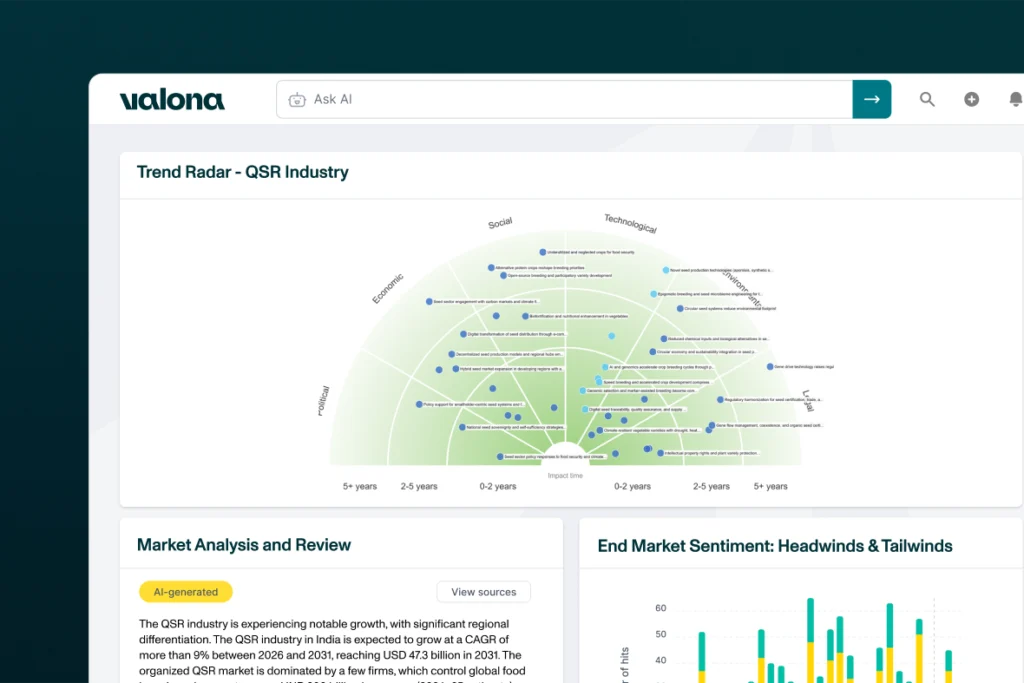
Know your market as well as your suppliers do. Bring an independent view of costs, supply, capacity and market conditions into supplier negotiations. Valona continuously connects market and competitor intelligence, industry-specific data and AI-powered analysis so you know what’s really changing — and which assumptions are worth challenging.
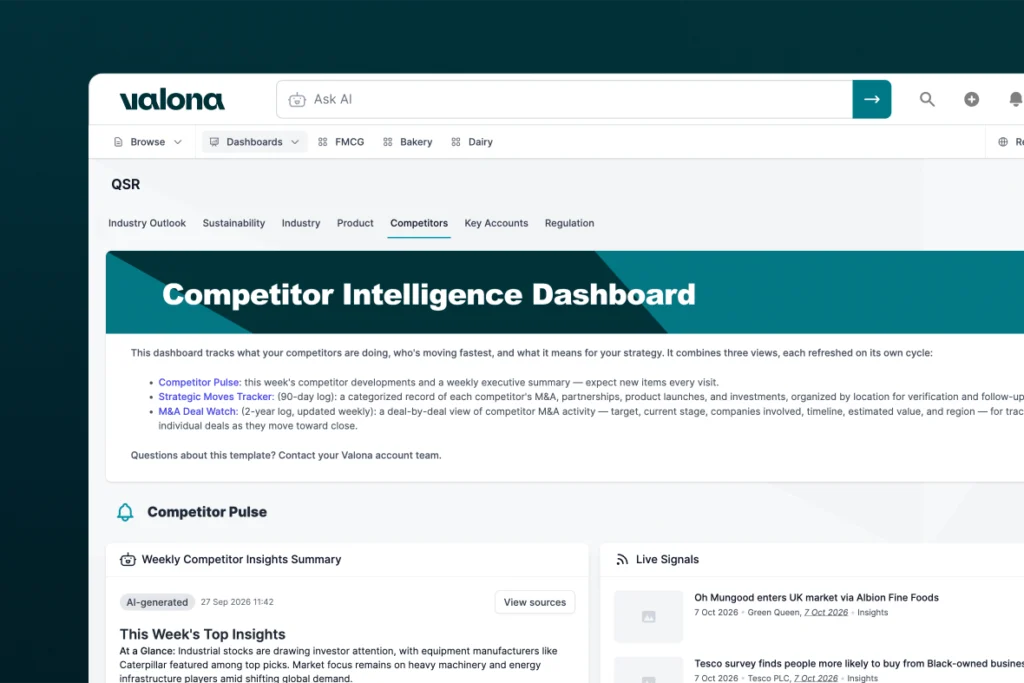
Competitor intelligence for QSR brands
Stay ahead of where the QSR market is moving next. Valona helps intelligence and strategy teams track menu and product innovation, new store formats, technology, franchisee expansion and other moves across QSR brands and markets. Look beyond traditional competitors to delivery platforms, meal kit companies and other emerging foodservice models reshaping the competitive landscape.
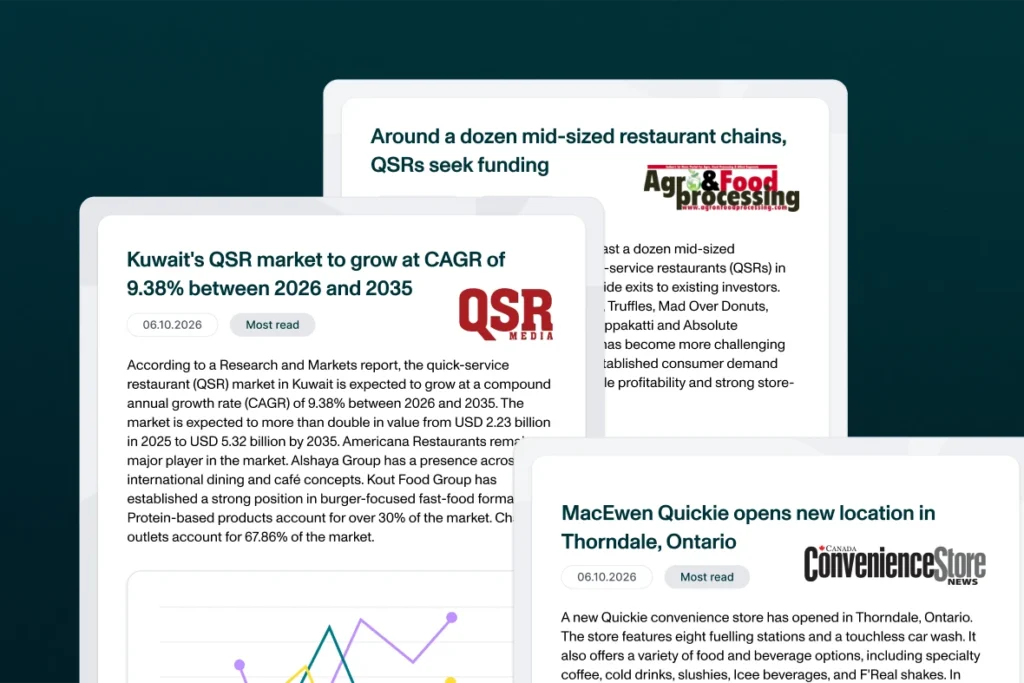
Global source coverage for QSR intelligence
QSR industry news only tells part of the story. Valona continuously monitors grower and agricultural organizations, processor and supplier updates, commodity and trade publications, government and regulatory sources, and local-language industry media across your sourcing markets.
What questions can QSR procurement teams answer with Valona?
Get a clearer view of the forces shaping supply and costs, so you know what’s changing before your next sourcing, contracting or category decision.
-

What’s driving the cost of frozen fries?
Connect changes in crops, production, processor costs and demand to understand what’s really behind a change in price.
-

Where could supply tighten next?
See changes in yields, production, processor capacity and demand that could put pressure on available supply.
-

How do costs compare across sourcing markets?
Compare production and landed costs across processors and regions to understand where your sourcing position is strongest and where alternatives may be emerging.
-

Where are new sourcing options emerging?
Track how frozen potato products are moving between markets, where trade flows are shifting and where new sourcing alternatives could be opening up.
-

What’s changing ahead of our next contract cycle?
Look beyond today’s prices to the supply, demand and cost developments that could change your negotiating position when contracts reopen.
-

Where is new processing capacity coming online?
See where processors are adding or expanding capacity and what it could mean for future supply, competition and sourcing options.
Go beyond the headlines in the QSR industry
Valona’s food industry experts connect developments across QSR brands, consumer behavior, financial performance, menu strategy and global markets to explain not just what’s changing, but what it could mean for your business.
Watch Mathieu Geuskens, Valona’s Food Industry Lead, break down the latest QSR results:
Know the frozen potato market from crop to customer
Valona has tracked food categories for 15 years, with specialized expertise and proprietary intelligence in frozen potato. Our Potato Market Monitor connects crop supply, processor economics and market demand, so you can understand what’s changing across the frozen potato market and what it could mean for supply and costs.
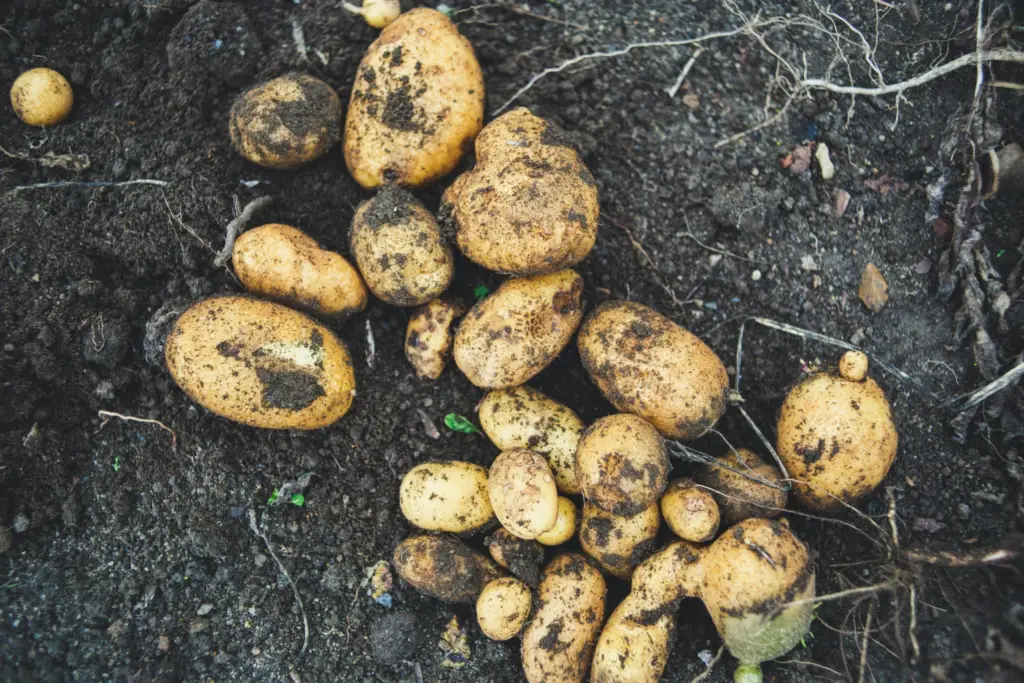
Crop supply
See where pressure on potato supply could be building. Follow growing conditions, acreage, yields and production across key sourcing markets.

Processor economics
Compare the economics behind frozen potato supply. Track processor capacity, production costs and trade flows across processors and sourcing regions.

Market demand
See where shifts in demand could put pressure on supply. Track frozen potato demand across countries and channels to identify where the market could tighten or where more supply could become available.
Let’s talk about what’s shaping your supply
Bring us a category, supplier or sourcing question and see how Valona can help you get a clearer view of the market behind it.
What’s cooking in the QSR industry
See what Valona’s analysts are finding across the QSR industry, from earnings and financial performance to the trends changing how restaurant brands compete.

FAQ
Market intelligence for the QSR industry helps restaurant chains understand the external forces affecting their business, from competitors and consumer demand to suppliers, food costs and sourcing markets. For procurement teams, it provides an independent view of the supply, cost and market developments that could affect sourcing and contracting decisions.
QSR procurement teams use market intelligence to track changes in food categories, suppliers, sourcing markets, production costs and demand. It can help teams understand what is driving costs, identify supply risks, compare sourcing options and prepare for supplier negotiations and contract cycles.
QSR procurement teams should monitor the developments most likely to affect supply, availability and costs, including crop conditions, commodity prices, processor capacity, supplier developments, trade flows, food inflation, regulation and changes in market demand. The most relevant signals will vary by food category and sourcing market.
VMarket intelligence gives procurement teams an independent view of the conditions behind supplier pricing and availability. By connecting changes in supply, production costs, processor capacity, trade and demand, teams can better understand which cost pressures are supported by the market and which assumptions are worth challenging.
Valona monitors sources across the markets behind QSR supply, including grower and agricultural organizations, processor and supplier sources, commodity and trade publications, government and regulatory sources, and local-language industry media. This helps QSR teams see relevant developments that may not appear in mainstream QSR industry news.
Valona combines AI-powered analysis with continuously monitored market and company intelligence and industry-specific data. QSR teams can use Valona’s AI research assistant to investigate questions, compare developments and trace findings back to their sources, while Valona’s food industry analysts add context and interpretation to complex market developments.
Valona provides specialized frozen potato intelligence through its Potato Market Monitor, connecting developments across crop supply, processor economics and market demand. QSR procurement teams can track growing conditions, acreage, yields, production, processor capacity, costs, trade flows and demand across key sourcing markets to understand what could affect future supply and pricing.
Valona helps teams track QSR industry trends across restaurant brands, consumer behavior, menu and product innovation, financial performance, franchisee expansion, store formats, technology and the supply chain. Teams can also monitor changes beyond traditional QSR competitors, including delivery platforms, meal kit companies and other emerging foodservice models, to understand how the wider competitive landscape is changing.