The Whey Squeeze: How GLP-1 is Rewriting Dairy’s Protein Economics
Whey has always been the by-product of cheese production. At today’s prices, whey is arguably becoming the primary product — and cheese the by-product. As GLP-1 adoption accelerates demand for protein, dairy processors are facing a supply squeeze severe enough to make cheese the afterthought. Here’s what’s driving it, and how the industry is responding.
In a previous article, we looked at how protein has become the dairy industry’s answer to margin pressure and market volatility. Here, we shift focus to what future accelerators of that demand are, and where we see it heading next.
Over the past years, whey demand has surged on the back of the broader protein trend. Once confined largely to sports nutrition, whey now shows up across a much wider range of fortified dairy products. More recently, rapid GLP-1 adoption has accelerated that shift further, pushing demand toward protein-rich dairy even faster. That shift is accelerating, and it’s reshaping how dairy companies think about protein sourcing.
How GLP-1 adoption is accelerating protein demand
According to a study by ING, published earlier this year, the global market for GLP-1s is projected to grow by more than 40%, from $70 billion in 2025 to $100 billion in 2027. Currently, 2% of European adults are using the medications, while penetration in the US is much higher (12%). That gap is unlikely to hold. ING modeled four different scenarios, where even the most conservative implies a two-fold increase in penetration across Europe by 2030.
The other three scenarios point to materially higher penetration, in the range of 8-20%. Three factors could push European adoption toward the higher end of the range:
- A market shifting from injectable to oral medication in 2027, cutting prices by up to 50% and removing the needle-aversion barrier
- Growing competition as more pharmaceutical companies launch their own GLP-1 drugs
- Potential expansion of government reimbursement
Across all scenarios, calorie intake is set to fall, with the most extreme case meaning a 2.5-3.5% volume decrease.
Research already shows 42% of GLP-1 users are having smaller meals, translating to grocery spend cuts by 5.3% within six months of adoption, a number that rises to 8.2% for higher-income households. As spending falls, users are prioritizing nutrient-dense, protein-rich products to preserve lean muscle mass during weight loss. Whey protein is often the preferred choice here, given its amino acid profile and digestibility. In dairy, yogurt is most often cited as the category best positioned to benefit.
Whey supply strain
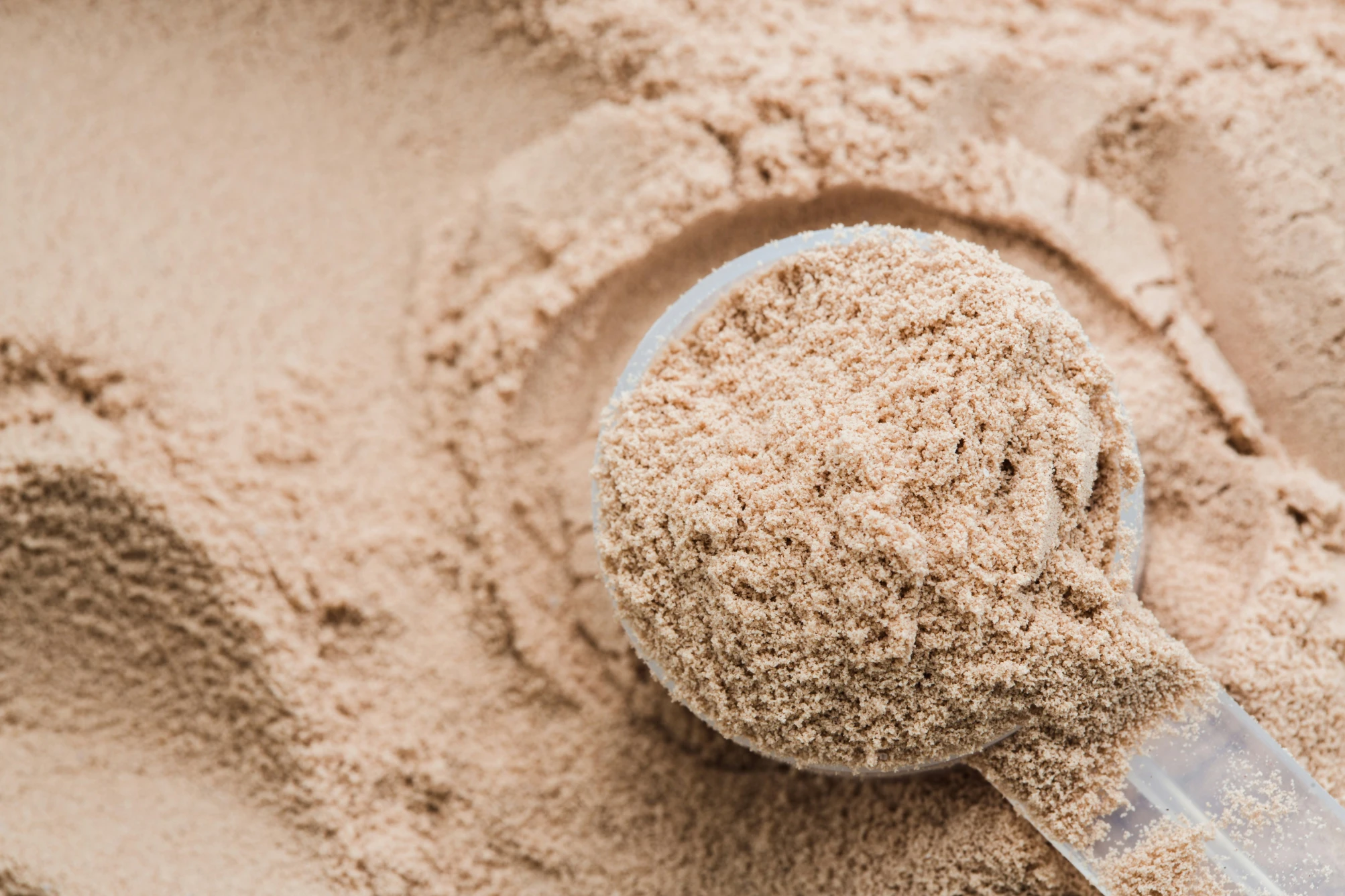
Recently, surging demand for whey protein has left two of its most popular forms — whey protein isolate (WPI) and whey protein concentrate (WPC) — in short supply. These are the forms used across powders, bars, functional foods and shakes. Some major US manufacturers now have no inventory left to land new customers or expand existing ones. WPI and Gouda cheese prices used to move in tandem. This changed in 2025 when whey prices took off and kept climbing, while cheese prices softened. At today’s price levels, whey is no longer just the by-product of cheese. As dairy economics shift, cheese risks becoming the by-product of whey production instead.
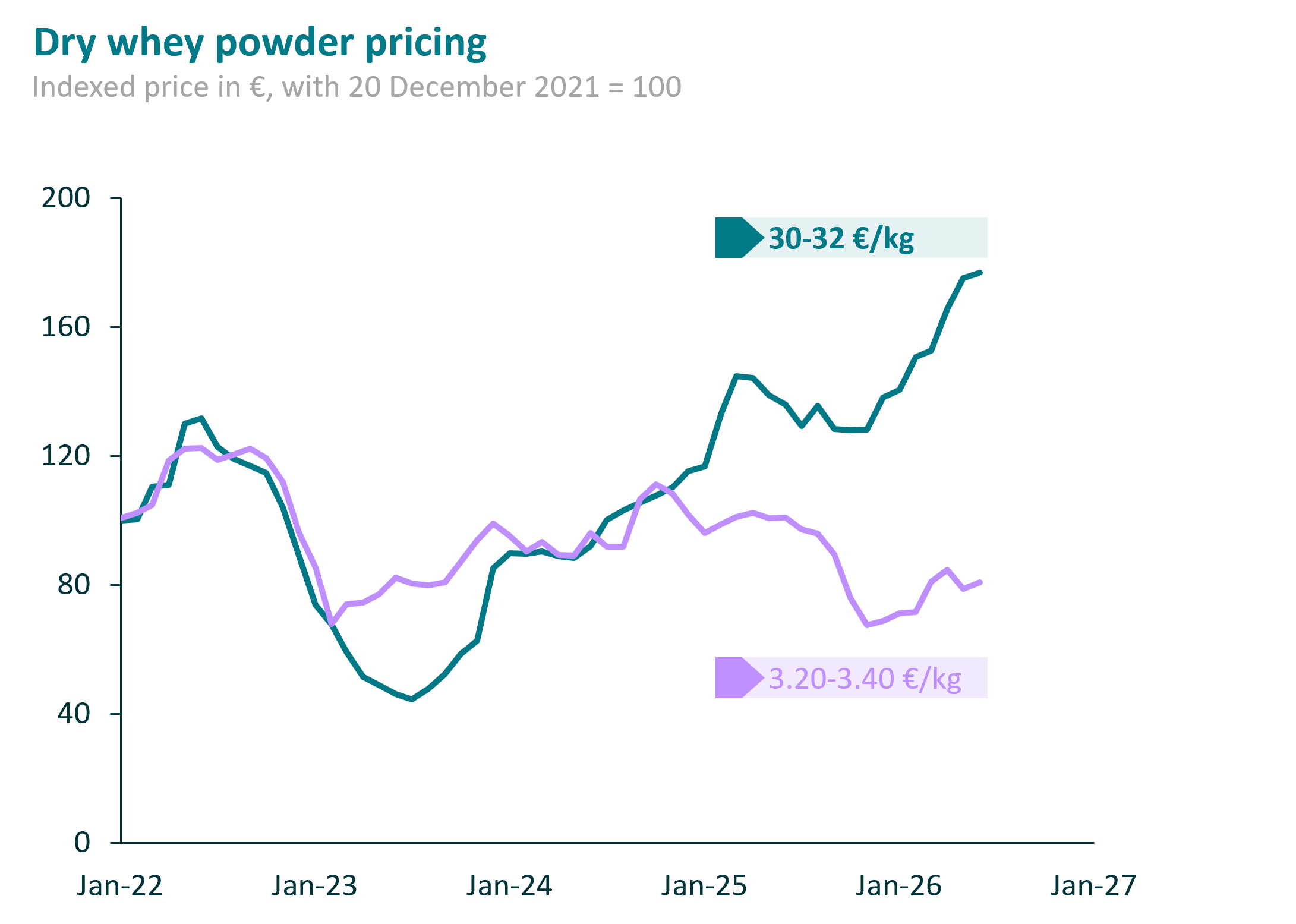
Prices are unlikely to ease anytime soon. Significant investments are underway, with some examples below, but most of it won’t be operational quickly:
- Arla is expanding US production through a partnership with Valley Queen this year.
- Glanbia is adding 4,500 metric tons of WPI capacity through its Southwest Cheese joint venture, coming online in 2027.
- Tirlán has committed €126 million to premium whey production, live by mid-2027.
- Land O’Lakes is putting $34 million into its Tulare site, online in 2027.
- FrieslandCampina is investing €90 million toward full capacity by 2028.
Meanwhile, WPI prices have surged roughly four-fold. Consumers have shown some willingness to pay more for protein-enhanced products, but passing on the full increase risks denting future demand.
Protein alternatives beyond whey
As whey prices rise, some processors and protein brands are already reformulating products, pausing whey-based lines or exploring alternative protein sources. The options they are considering largely fall into three categories:
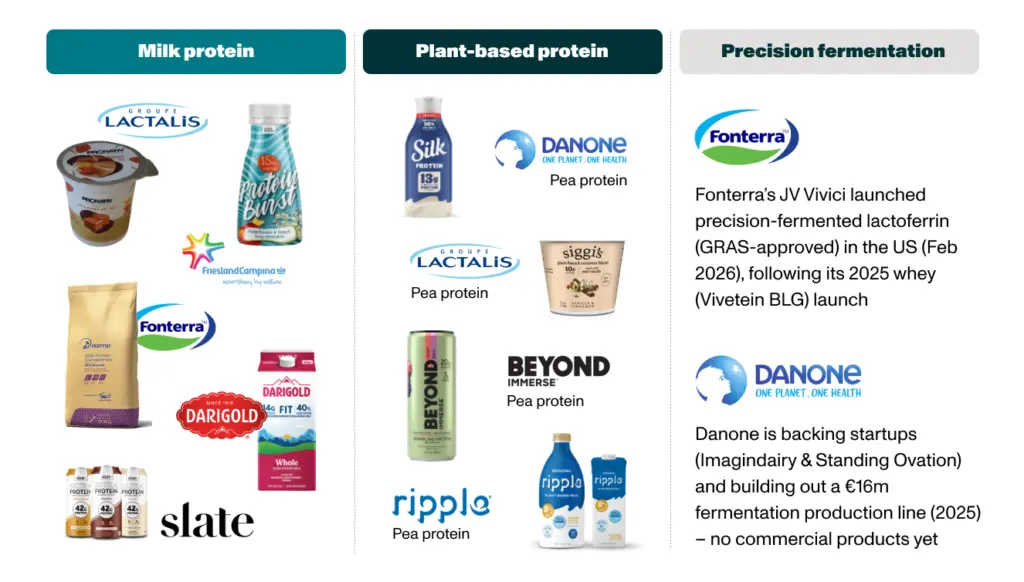
Milk protein concentrate is one of the closest alternatives to whey and can be a relatively cost-effective substitute. But it isn’t a like-for-like replacement: switching can affect fermentation time and produce a sourer taste or chalkier texture.
Plant-based protein avoids the digestive issues some consumers associate with whey and carries a lower carbon footprint. However, single plant sources rarely match whey’s complete amino acid profile on their own, which is why products often use blends.
Precision fermentation is the least mature option but attracted $840 million in investment in 2024, led by Fonterra and Danone, even though lab-made proteins still cost two to five times more than traditional whey.
The shift is already visible in product decisions. HelloAmino in Canada is reformulating its baking mixes with alternative protein blends in response to higher whey prices. Vitalura Labs, a US supplement company, paused its whey protein isolate line, which accounted for roughly half its sales, after costs rose more than 300% since 2023; it is instead promoting creatine, collagen and a plant-based blend of pea, pumpkin seed and brown rice protein.
In the UK, Majic Protein, which makes cookie dough desserts, began exploring milk and pea protein blends after whey prices rose 30% in three months and its supplier warned it could run out by September. Its experience also illustrates the formulation challenge: the company’s co-founder says milk protein concentrate produces “a completely different mouthfeel.” Costco’s Kirkland brand has also discontinued its whey protein products, although the company has not publicly attributed that decision to whey prices.
Precision fermentation is taking a different route. Fonterra’s Vivici joint venture has launched a fermented whey protein and a GRAS-approved fermented lactoferrin in the US, while Danone is backing fermentation startups and building its own production line, though it still describes the space as exploratory.
None of these alternatives replaces whey outright. But with 70% of consumers saying they would buy animal-free dairy products once cost and formulation catch up, established players are treating this as insurance rather than experimentation: enough flexibility that no single ingredient determines whether a product can be made.
What the increase in whey demand means for dairy players’ strategies
None of the three alternative proteins replaces whey outright. But recent moves show it’s not just start-ups chasing a trend, but also established dairy players putting serious investment into alternative proteins. On the demand side, consumers are ready to buy more animal-free dairy products once cost and formulation reach parity. That makes exploring alternatives an increasingly strong business case under today’s whey price regime. The goal isn’t to fully replace whey, but to build enough flexibility that no single ingredient determines whether a product can be made, or made economically.
Track dairy market and competitive intelligence with Valona
The patterns in this brief didn’t come from a single source. They became visible by connecting cost data, margin trends, and strategic priorities across regions and over time.
Valona brings those signals together into continuous, validated competitive and market intelligence, helping strategy, innovation and market intelligence teams understand what’s happening in the dairy industry, what it means, and what to do next.
Curious what this looks like for your own category? See how Valona helps global food and beverage industry players stay ahead of shifts like these.
FAQs
GLP-1 users tend to eat smaller portions and cut overall grocery spend, but they prioritize protein to preserve muscle mass during weight loss. That’s increasing demand for protein-dense dairy products — yogurt in particular — even as grocery spend falls, and GLP-1 usage is expected to keep growing in both the US and Europe over the next several years.
Demand for whey protein isolate has outpaced production capacity, pushing European dry whey prices up 55% between Q3 last year and Q2 this year. New capacity from producers like Glanbia, Arla, Tirlán, FrieslandCampina and Land O’Lakes is underway, but most of it won’t be fully operational until 2027 or 2028, so tightness is likely to persist in the near term.
As whey protein prices climb above cheese and butter, some producers may start treating cheese as the byproduct of whey production rather than the reverse. If that shift continues, it could add further downward pressure on cheese prices — echoing the divergence already visible in the data since 2025.
Processors are testing three main paths: milk protein concentrate, which is dairy-based and cost-effective but changes taste, texture and processing time; plant-based proteins, which reduce cost and carbon footprint but often need blending to match whey’s amino acid profile; and precision fermentation, a capital-intensive but fast-growing category backed by companies including Fonterra and Danone.
Beyond price charts, intelligence teams should track capacity investment timelines, product reformulation announcements, and which competitors pause or discontinue whey-based lines. Together, these signals show how exposed the industry is to continued tightness and how quickly companies are hedging with alternative proteins.